


In This Edition
- The Overview: The 60-second periorbital assessment.
- The Case: Make your call.
- The Assessment: Findings that change the plan.
- The Decision: How would I approach this patient?
- What to Avoid: Three classic traps.
- Take it to the Clinic: The 60-second assessment.
- The Evidence: If I could recommend only three papers.
This Sunday, you are receiving our first Aesthetics Decisions as a special edition of The Plastics Paper.
From October onwards, Aesthetics Decisions will be its own monthly newsletter.
The Overview
The 60-Second Periorbital Assessment
- Beauty is harmony over perfection: Individual features don’t exist in isolation. It’s the relationship between features that matters.
- The eyes as a whole: Brow height, eyelids, and surrounding features work together.
- Changing one feature changes the balance: Isolated correction can affect overall harmony.
- Beyond perfect measurements: There’s no single formula for the ideal eye.
The Case
How to Read the Periorbital Region as One Connected Aesthetic Unit
A 52-year-old woman presents requesting an upper blepharoplasty. Her concern is simple: her upper eyelids feel heavier, she looks tired, and she wants to know whether removing the excess skin will make her look more refreshed.
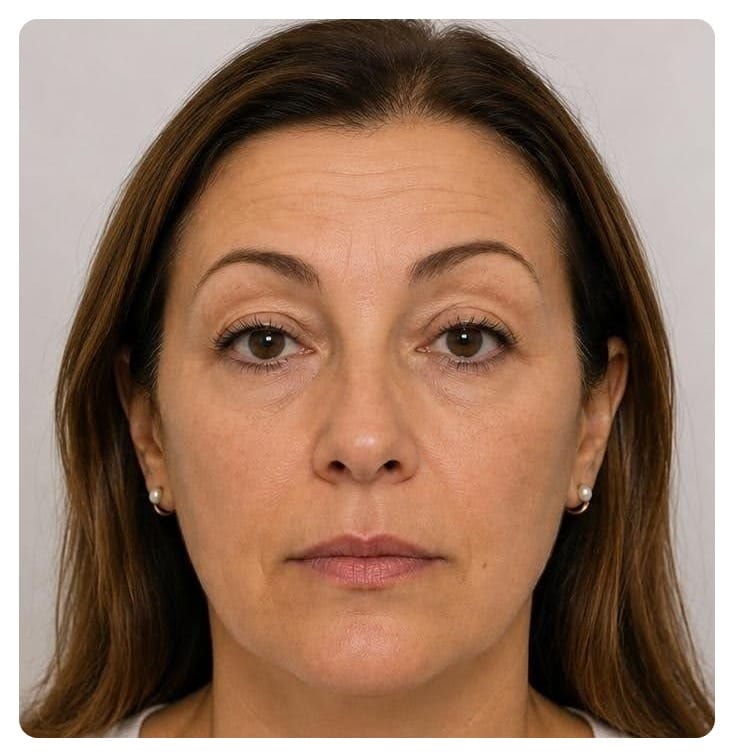
The answer will be revealed in the next edition.
The Assessment
Findings That Change Your Plan
A practical consultation framework for deciding what truly needs correcting. Focus on the details, then take a step back.
Focus on the Details
Look at the forehead before you look at the eyelid. At first glance, this patient appears to have a straightforward upper-lid problem. But there is one finding that should make you pause: frontalis recruitment.
Frontalis recruitment can partially mask brow ptosis and make the upper eyelid appear to be the primary problem.
Ask the patient to fully relax the forehead and reassess.
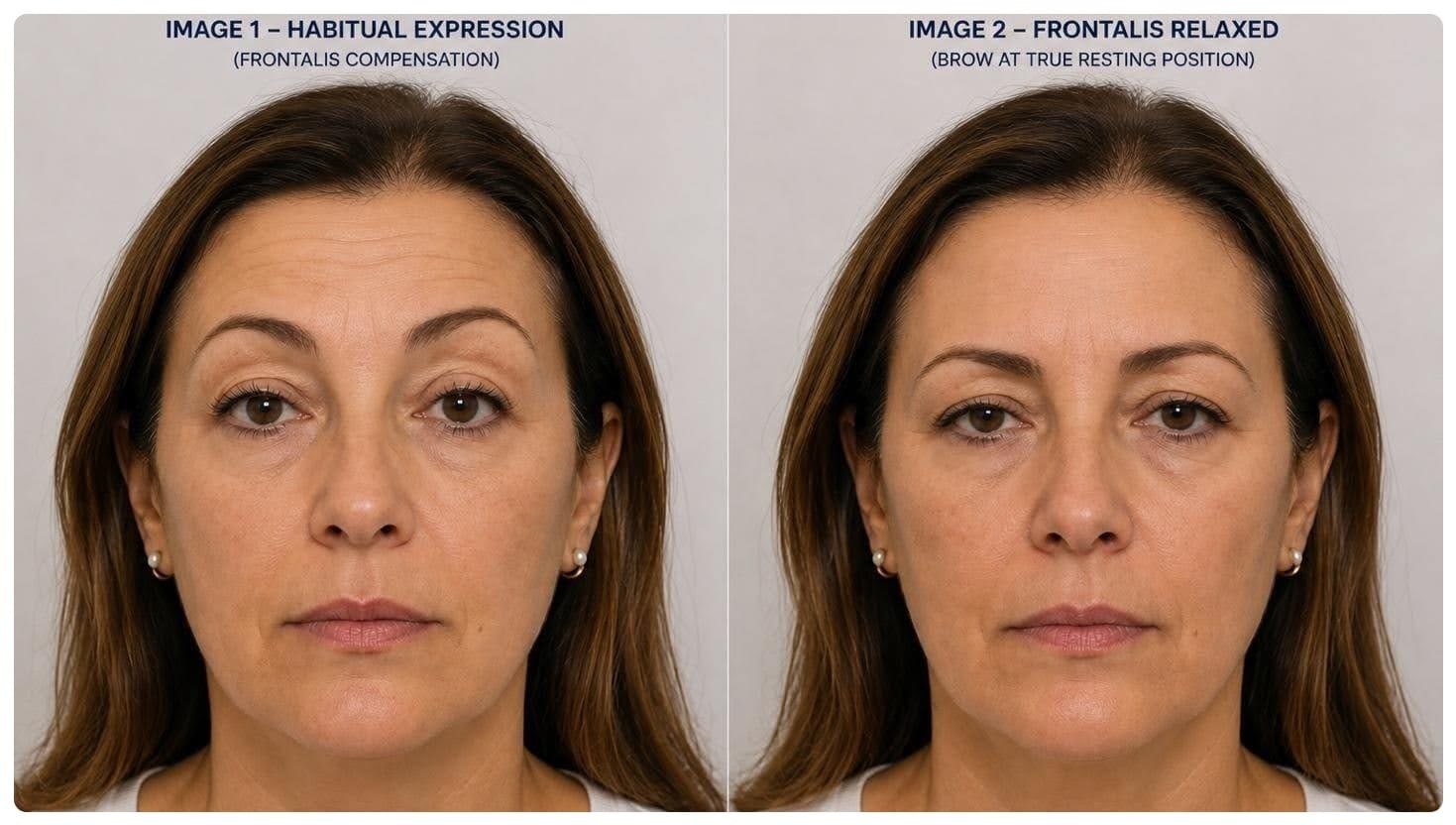
Once the frontalis relaxes, the brow settles into its true resting position. In this patient, the lateral brow descends, and the upper lid appears more crowded.
The eyelid has not changed. Your assessment has.
Now step back: Think in terms of the orbital unit
Brow position alone does not determine whether the periorbital region looks attractive, youthful, or balanced. The brow, upper eyelid, eye, and lower lid-cheek junction need to be read together as a single aesthetic unit.
The Orbital Oval Balance Principle reframes the assessment away from an absolute ideal brow height and toward the relationship between the structures surrounding the eye. Both narrow and wide orbital ovals can be attractive when their components remain balanced.
This changes the question from “Is the brow low?” to “Is the periorbital region balanced?”
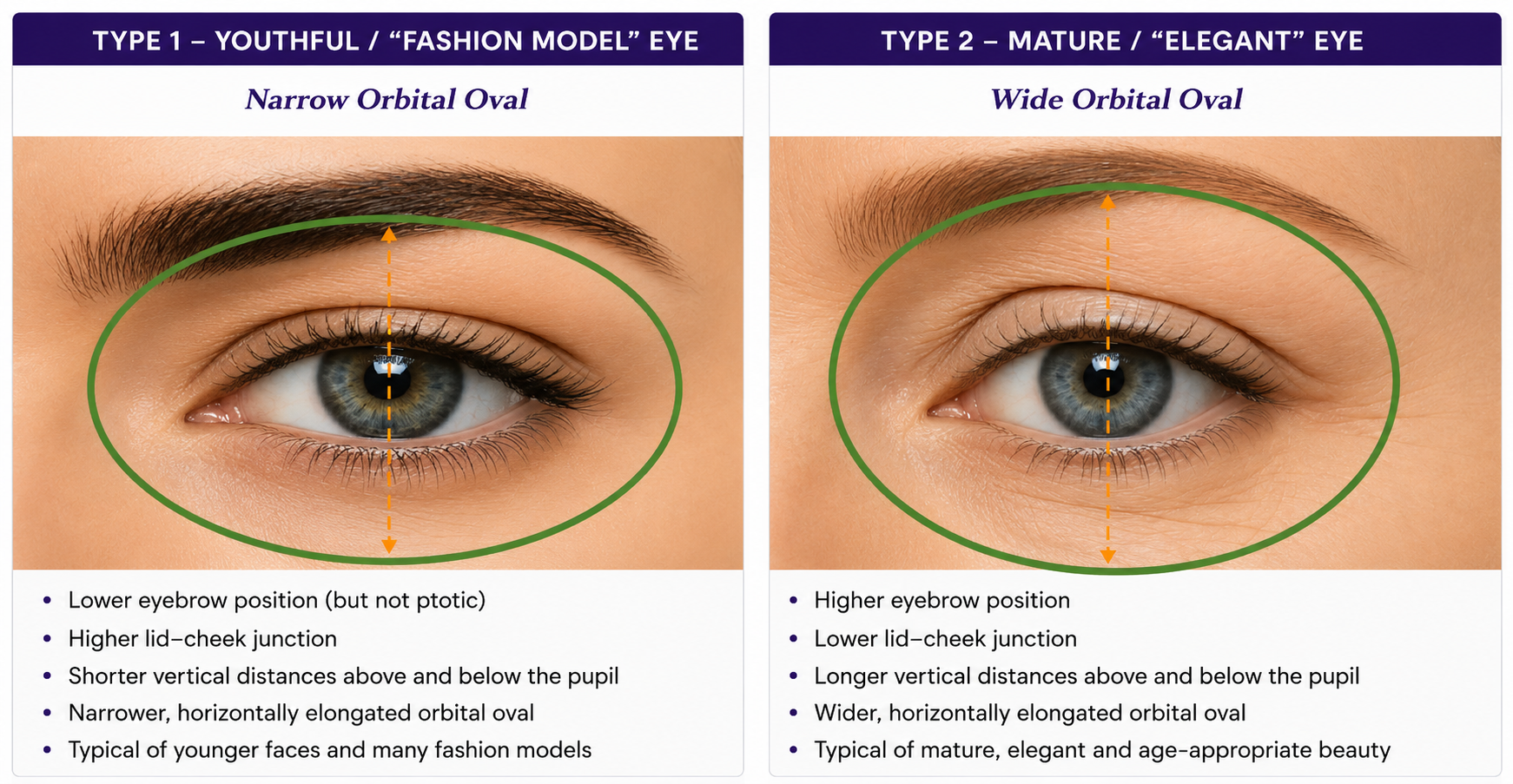
A low brow is not, by itself, an indication for a brow lift. The aim is not to create a higher brow, but to identify which component, if any, is disrupting the overall balance.
The Decision
How to Approach This Patient
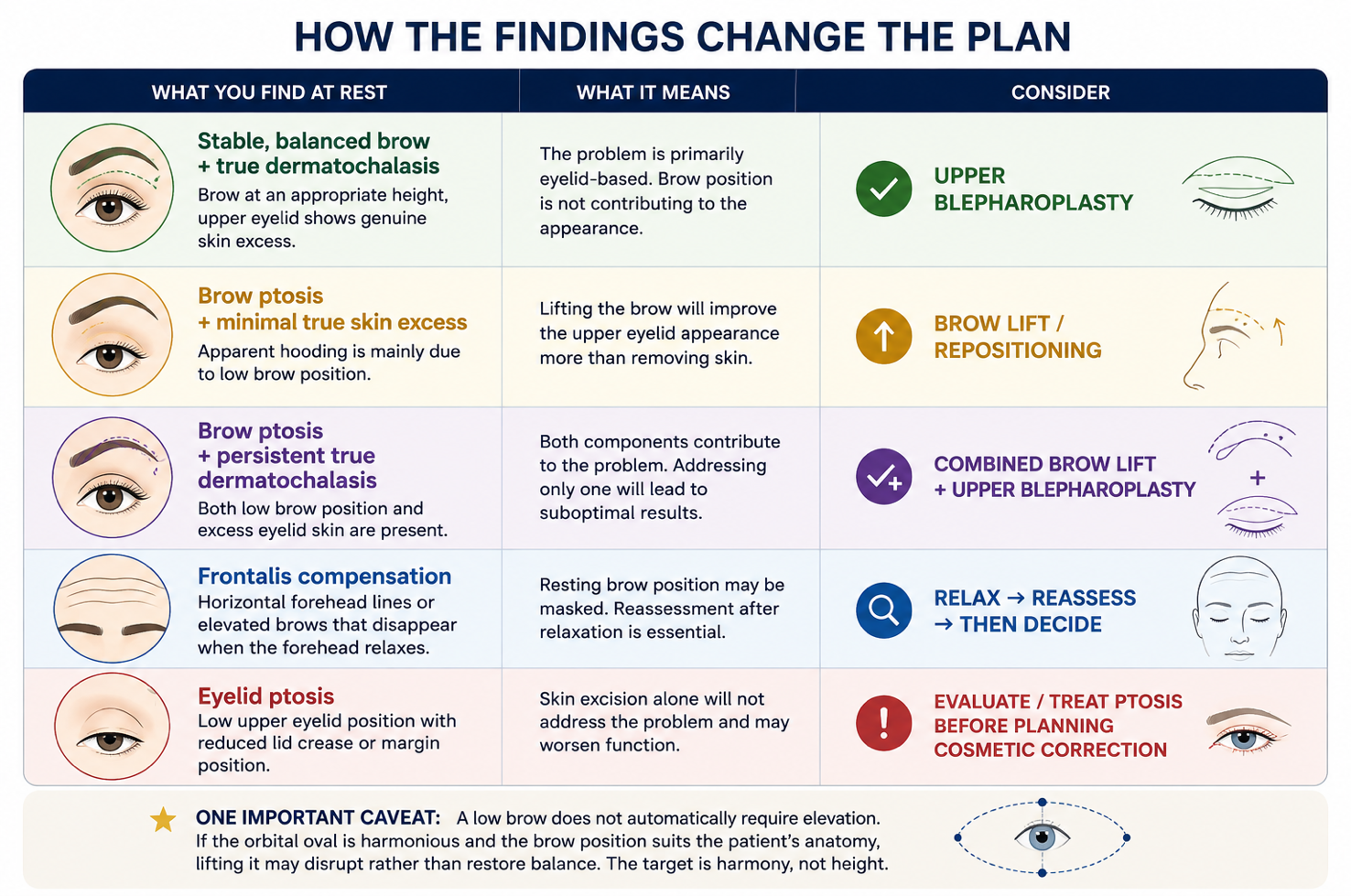
Once the brow has been assessed at rest, the decision becomes clearer.In this patient, frontalis relaxation reveals true brow ptosis, particularly laterally, while genuine upper-lid skin excess remains present.
My preference would therefore be a combined approach: brow repositioning with a conservative upper blepharoplasty.
Treating the eyelid alone would address the skin excess, but not the brow component contributing to the imbalance. Conversely, a brow lift alone would improve brow position but leave true dermatochalasis untreated.
Important to Avoid
Three Classic Traps in These Patients
Even a technically well-performed operation can disappoint if the initial assessment is incomplete. Before choosing the procedure, avoid these three common traps.
- Missing frontalis compensation: Assessing the brow while the frontalis is active can hide its true resting position. Relax the forehead before judging brow position or upper-lid excess.
- Treating one structure instead of the orbital unit: A brow or eyelid may look acceptable in isolation, but still be out of balance with the rest of the periorbital region. Step back and assess the orbital oval before deciding what, and how much, to change.
- Choosing the operation before defining the anatomy: Starting from “blepharoplasty or brow lift?” risks matching a procedure to a complaint rather than identifying the structures responsible for it. Define the anatomical problem first. Let the diagnosis determine the operation.
Take it to the Clinic
The 60-Second Periorbital Assessment
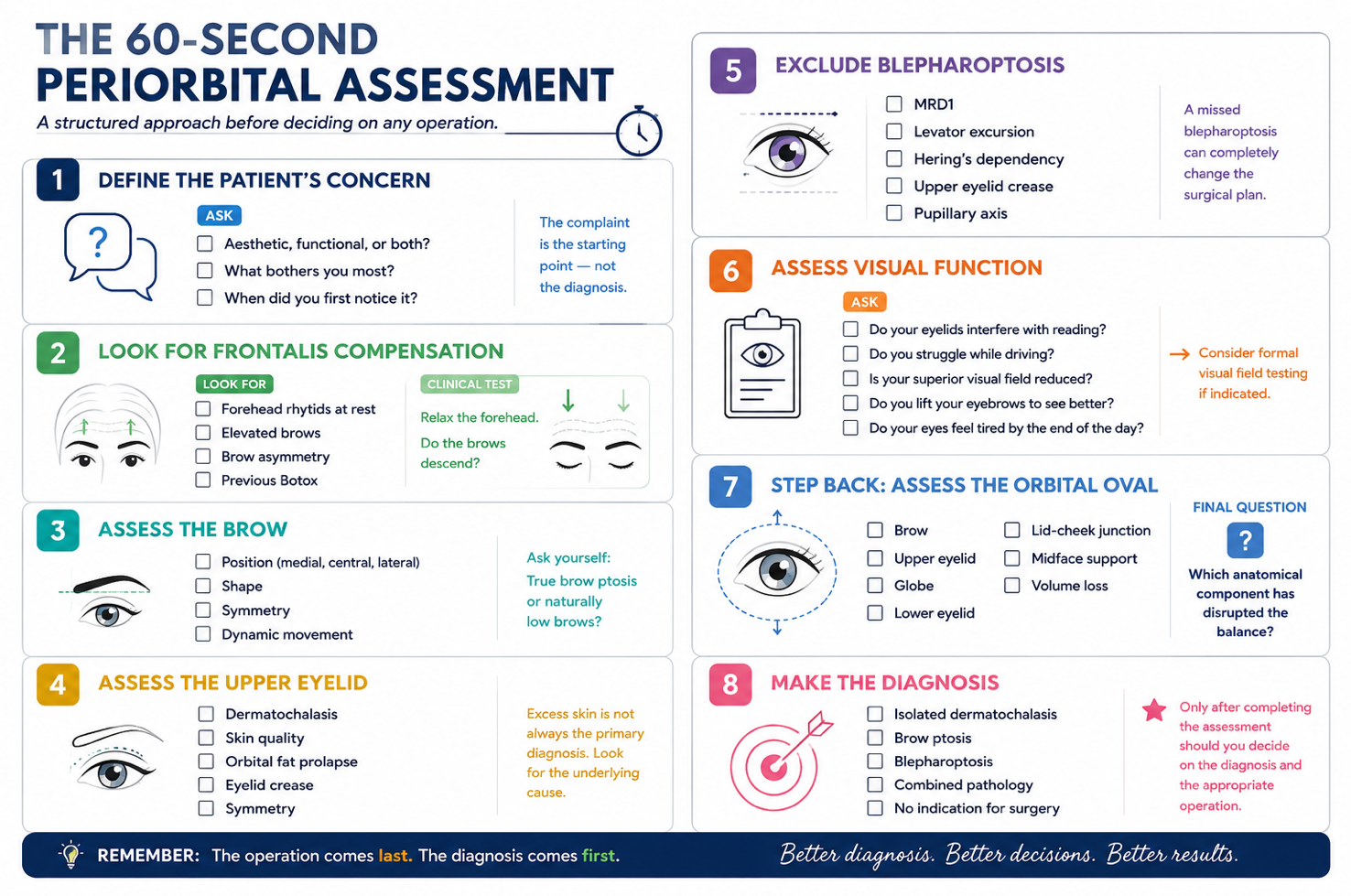
Before discussing an upper blepharoplasty or brow lift, run through these seven checks.
- Forehead: Is the frontalis active at rest?
- Relax the brow: Reassess its true resting position.
- Brow position: Assess medial, central, and lateral brow.
- Upper-lid skin: How much true dermatochalasis remains?
- Crease-platform: Is the brow-crease-pretarsal relationship balanced?
- Step back: Assess the entire orbital frame.
- Final Thought: What anatomical change actually improves this patient?
3 Papers Worth Reading
Evidence & Further Reading
The Orbital Oval Balance Principle
Shifts periorbital assessment from isolated brow height to proportional balance across the orbital frame.
The Brow-Eyelid Continuum
Shows why brow and upper-eyelid position should be assessed together before choosing either procedure.
The Influence of Brow Position on Perceived Facial Expression
Reminds us that changing brow position alters not only anatomy, but how facial expression is perceived.
Before You Leave
The best surgeons don't collect operations. They collect better questions.
This month, I hope you'll leave with one: Am I treating the patient's request, or the anatomy in front of me?
See you in the next edition.
