


In this week's edition
- ✍️ Letter from P'Fella
Grassroots is going live soon! - 🤓 The Sunday Quiz
Just one week until the finale! - 🖼️ Image of the Week
When primary closure is enough - 🚑 Technique Tip
Superior gluteal artery perforator flap - 🎓 Building in Public
Get exclusive early access to our new plastics platform - 📖 What Does the Evidence Say?
Do muscle flaps reduce pressure sore recurrence? - 🔥 Articles of the Week
Pedicled & musculocutaneous flaps for pressure sore recon and recurrence of pressure sores. - 💕 Feedback
Suggest ideas & give feedback!
A Letter from P'Fella
Grassroots Is Going Live Soon!
Why that operation? Why that plane? Why this patient and not another? Those small questions are often where the useful part begins, because they take you beyond the polished answer and into the thinking behind it.
That’s what we’ve been trying to hold onto as Grassroots has grown. The team is now much more international, and we’re getting ready to take the next step with a short series of live global webinars, starting with aesthetics.
We’re currently planning sessions around periorbital rejuvenation, facelift surgery, and fillers. The speakers and final dates are still being confirmed, so we’ll share the full programme once everything is locked in. But the format is coming together, and I’m genuinely excited about it.
The sessions will be built around cases and decisions rather than long lectures. We’ll send a small amount of reading beforehand, give everyone the same clinical problem, and ask you to make the call before hearing how an expert approaches it. You’ll be able to vote, compare your answer with the rest of the group, and then ask questions as the case is worked through.
The challenge for us is making something global still feel personal. We don’t want you to log in, watch an hour of slides, and disappear. We want the session to feel like you’re in the room with the speaker, able to question the plan, understand what changed their mind, and hear how their approach might differ when the patient, resources, or clinical setting changes.
That brings us back to a question we raised in an earlier letter: can one set of rules work globally?
The principles may travel, but practice is shaped by where you trained, what you have access to, and the patients in front of you. Bringing people from different countries into the same case discussion gives us a chance to hear those differences properly, rather than pretending they don’t exist.
We’ll also keep the learning going between sessions with shorter teaching points and readings from the discussion. The idea is for each webinar to lead into the next, rather than ending the moment everyone closes Zoom.
We’ve opened a waiting list below. If you’d like to join the first Grassroots live series, leave your details and we’ll let you know as soon as registration opens.
P’Fella ❤️
The Sunday Quiz
Just One Week Until the Finale!
Each week, we'll put your plastic surgery knowledge to the test with a new question designed to challenge you and keep you thinking. Join in every Sunday, keep your wits about you, and compete for the top spot. The winner at the end of eight rounds will receive 6 months of Plastics Pro, on us.
Image of the Week
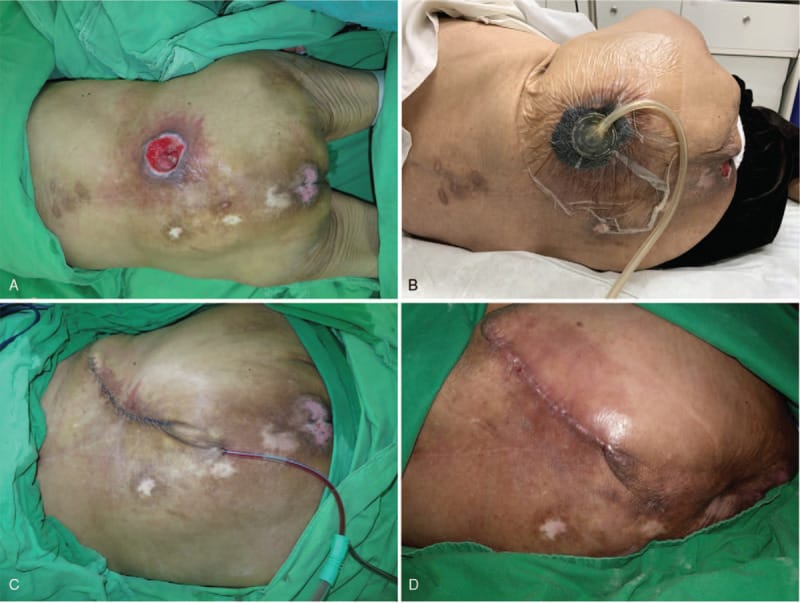
When Primary Closure Is Enough
Not every sacral pressure sore requires flap reconstruction. The key is adequate debridement, a clean wound bed, and closure without excessive tension.
This image follows an 89-year-old patient with a sacral pressure sore through four stages: initial presentation, debridement followed by negative-pressure wound therapy (NPWT), delayed primary closure, and healing at two weeks.
NPWT acts as a bridge between debridement and definitive closure, helping prepare the wound bed. For selected smaller defects, primary closure may avoid the additional operative burden of flap reconstruction.
Technique Tip
Superior Gluteal Artery Perforator (SGAP) Flap
The superior gluteal artery perforator (SGAP) flap provides well-vascularised fasciocutaneous tissue for sacral pressure sore reconstruction while preserving the underlying gluteus maximus muscle. Its pedicled design allows mobilisation of tissue across the midline, with bilateral flaps offering additional coverage for larger defects.
This video demonstrates the use of a pedicled SGAP flap for sacral pressure sore reconstruction. The technique highlights the role of perforator-based flap design in achieving durable soft-tissue coverage, managing dead space, and preserving muscle function.
Building in Public
Get Exclusive Early Access to Our New Plastics Platform
We're aiming to launch in early December, just in time for our upcoming Grassroots webinar series, which will bring live teaching and interactive features together.
But before we officially launch, we'd love to invite a small group from our community to get exclusive early access, test out the platform, and share their feedback.
If you'd like to be among the first to try it, leave us your email below. We'll be in touch with those selected!
What Does the Evidence Say?
Do Muscle Flaps Reduce Pressure Sore Recurrence?
Later evidence remains mixed. A cohort of 181 reconstructed ulcers reported overall complication and recurrence rates of 46.4% and 16.0%, with no significant differences between musculocutaneous, fasciocutaneous, and perforator-based flaps. A newer systematic review did report lower pooled recurrence with musculocutaneous flaps, but the included literature comprised heterogeneous clinical series rather than a definitive randomised comparison. These differences may therefore reflect patient selection, ulcer location, defect depth, and postoperative care as much as flap composition itself.
Muscle is useful when a defect requires substantial bulk or dead-space obliteration, but it should not be included solely on the assumption that it prevents recurrence. Flap selection should be tailored to the defect while preserving future reconstructive options.
Recent data also suggest that recurrence is strongly associated with factors such as active smoking, postoperative infection, and poor adherence, reinforcing that durable reconstruction depends on optimisation and off-loading.
(Sameem, 2012); (Thiessen, 2011); (Chiu, 2017); (Vathulya, 2022); (Emanuelli, 2026)
Articles of the Week
3 Interesting Articles with One-Sentence Summaries
In stage III-IV sacral pressure sores, vascularised pedicled flaps achieved favourable outcomes in 83.3% of patients at one month, with larger ulcer and flap dimensions associated with poorer healing outcomes.
Musculocutaneous flaps had an 8.9% recurrence rate, compared with 11.2% for fasciocutaneous flaps and 5.6% for perforator flaps; however, these differences were not statistically significant, indicating no proven advantage of muscle-based reconstruction in preventing recurrence.
Pressure sore recurrence reached 49% in a study of spinal cord-injured patients, with poorly controlled diabetes, albumin below 3.5 g/dL, previous surgery at the same site, and ischial ulcer location identified as significant risk factors, highlighting the importance of preoperative optimisation and pressure offloading.
