


In this week's edition
- ✍️ Letter from P'Fella
Building a team together - 🖼️ Image of the Week
Managing lift and skin excess in superior pedicle reduction - 🚑 Technique Tip
Wise pattern & pedicle principles - 📖 What Does the Evidence Say?
Pedicle choice is really an NAC perfusion question - 🔥 Articles of the Week
No vertical scar breast reduction, vertical reduction mammaplasty, & breast reduction complications. - 💕 Feedback
Suggest ideas & give feedback!
A Letter from P'Fella
Building A Team Together
Real conversations about where you work, what you care about, what parts of plastic surgery you consistently revise, and where you’d love to contribute.
There’s something very special about realising that this isn’t just a platform people read from a distance. It’s something people genuinely want to be involved in.
And that’s made us even more excited about where this is heading.
As The Plastics Fella grows, one of the things we’ve been building out more deliberately is a department structure across different areas of plastic surgery. Each specialty has its own sub-areas, questions, specific surgical scenarios and people who really live and breathe it every day. It feels right that the teaching grows in the same way. So instead of having everything in one big pile, we’re starting to build dedicated units around each specialty, with the right people leading them.
The first of those is now in place: our Aesthetics Unit, with Foad Nahai as the expert and Benedetta Agnelli as clinical lead. We’re incredibly excited about this.
For our second stage, we're already working on the Lymphovascular Department, and there are more to come after that. We're planning for this to be the start of something much bigger, and much more collaborative, than what we could build with one small team.
What’s probably been most encouraging is how many people have reached out wanting to be involved in some way. Some of you want to review, some want to teach, some want to help shape how surgical education is done, and some simply want to be part of building something worthwhile. We’re truly grateful for that. And as we start opening up the next departments, we’ll open applications again so more of you can join us when the right fit comes up.
There’s a lot more ahead, and we’re very excited about it.
With love,
P’Fella ❤️
Image of the Week
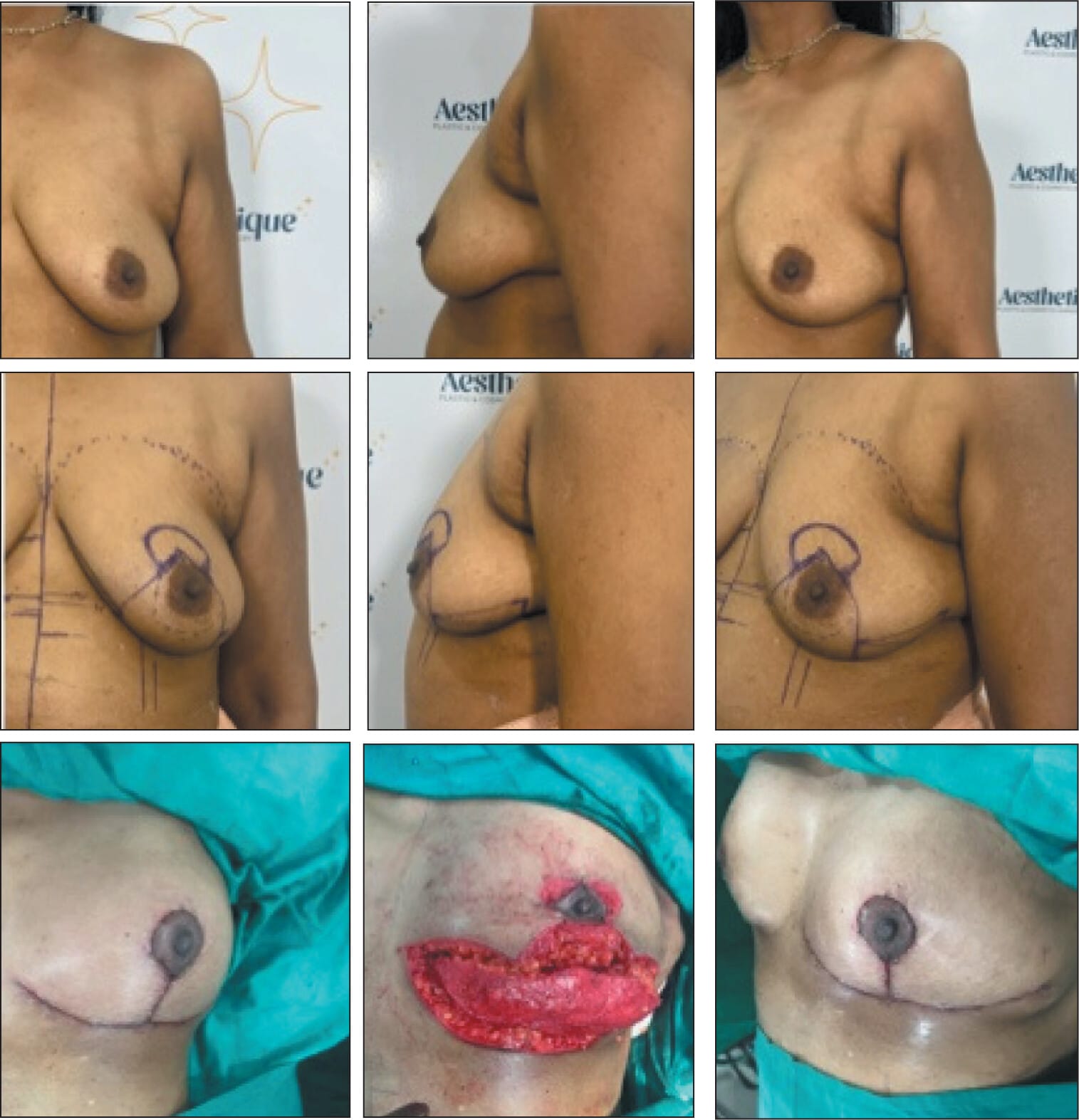
Managing Lift and Skin Excess in Superior Pedicle Reduction
This image demonstrates a superior pedicle breast reduction performed with an inverted-T (Wise pattern) skin resection.
You can see preoperative ptosis, markings, intraoperative pedicle elevation, and final result. The nipple-areola complex (NAC) is maintained on a superiorly based pedicle, preserving its vascular and neural supply while allowing controlled repositioning.
In this case, a 5 cm lift is achieved, but the key decision is not just the pedicle. Significant skin excess and poor skin quality necessitate an inverted-T pattern, which allows reliable reshaping and removal of redundant tissue. This pattern remains widely used due to its predictability and versatility, especially in larger or more ptotic breasts.
Technique Tip
Wise Pattern & Pedicle Principles
This video demonstrates a Wise pattern (inverted-T) reduction, providing reliable skin excision and three-dimensional control of breast shape. A key principle is that skin pattern determines the envelope, while the pedicle determines NAC viability, and these must be planned independently.
The operative focus is controlled parenchymal resection with preservation of a well-vascularised pedicle, followed by pillar-based shaping to recreate projection. Final contour should come from internal architecture, not skin closure alone as poor pillar support leads to flattening or bottoming out over time.
What Does the Evidence Say?
Pedicle Choice Is Really an NAC Perfusion Question
Clinically, that anatomy helps explain why superomedial/vertical techniques have become so popular, but the outcomes literature does not show a universal winner. In a matched cohort study, superomedial vertical-scar reduction had no significant difference in major or minor complications compared with the traditional inferior-pedicle Wise-pattern approach. In the classic randomized comparison of moderate-sized reductions, patients having a vertical/medial pedicle reduction were less disappointed by the scar, but they also underwent more revisions than patients treated with the Wise pattern.
Sources: (le Roux, 2010); (Seitz, 2015); (Stirling, 2017); (Antony, 2013); (Cruz-Korchin, 2003)
Articles of the Week
3 Interesting Articles with One-Sentence Summaries
This technique removes the visible vertical scar by limiting incisions to the periareolar region and inframammary fold, ideal for patients with significant ptosis (>5-7 cm nipple elevation needed), but it can risk boxy contour or dog-ear deformities if not carefully executed.
This technique refines the classic vertical (lollipop) reduction by using a dermoglandular pedicle and minimal tissue undermining, making it easier to learn, applicable to both small and large reductions, and associated with reduced scarring while maintaining safe nipple-areolar vascularity.
About 1 in 3 patients develop early postoperative complications, with key risk factors including smoking, diabetes, high BMI, large resection weight, and long sternal notch-to-nipple distance, showing the importance of thorough preoperative optimisation.
