


In this week's edition
- ✍️ Letter from P'Fella
When should you break the rules? - 🖼️ Image of the Week
When you cannot replant yet - 🚑 Technique Tip
Multiple digit replantation - 🎧 How I Operate
Snippet from ep 4: A small anatomical detail with a big impact - 📖 What Does the Evidence Say?
Can digital replantation wait until morning? - 🔥 Articles of the Week
Temporary ectopic replantation, & replant survival vs functional recovery. - 💕 Feedback
Suggest ideas & give feedback!
A Letter from P'Fella
When Should You Break the Rules?
Mark this many centimetres from that landmark. Raise the flap this way. Preserve this structure. Close it in this order.
Most of them are necessary, especially when you’re starting out. They give you a safe way to think before you’ve built enough experience to know why these rules are in place. They give you something reproducible to fall back on when you don’t yet have the experience to make every decision for yourself.
But at some point, you start noticing that the best surgeons don’t follow every rule blindly.
That comes up repeatedly whenever I sit down with an expert for a recording of How I Operate. Over the last few months, we’ve had the chance to sit down with Elizabeth Hall-Findlay, JP Hong, Fouad Nahai, Claudio Angrigiani, and most recently, Pedro Cavadas.
Five very different surgeons with five very different careers. And there’s something they seem to have in common. At some point, each of them looked at something they had been taught and asked:
Does it actually have to be done this way?
Elizabeth Hall-Findlay spoke about first learning the accepted way to perform breast reduction, then gradually changing her approach as her own experience and understanding developed. Foad Nahai made a similar point from a different angle: plastic surgery gives us enormous freedom to innovate, but that freedom has to sit alongside knowing your limitations and remembering who lives with the consequences.
Our next conversation with Pedro Cavadas (releasing on 30th August!) probably brought this idea out more than any other. There were several moments where Pedro described doing something differently from how many of us are taught. His approach to venous anastomoses is one example. Rather than accepting that two veins must always be better than one, his preference is often to concentrate on making one anastomosis as good as it can possibly be. His sequence for replantation is different too, because over thousands of cases he has found an order that works better in his hands.
None of this means the rules are useless. Quite the opposite. You probably need to understand them extremely well before you can recognise when there might be a better way.
So, the takeaway is: The goal isn’t to become confident enough to ignore the rules. It’s to become experienced enough to understand why they exist.
P’Fella ❤️
Image of the Week
When You Cannot Replant Yet
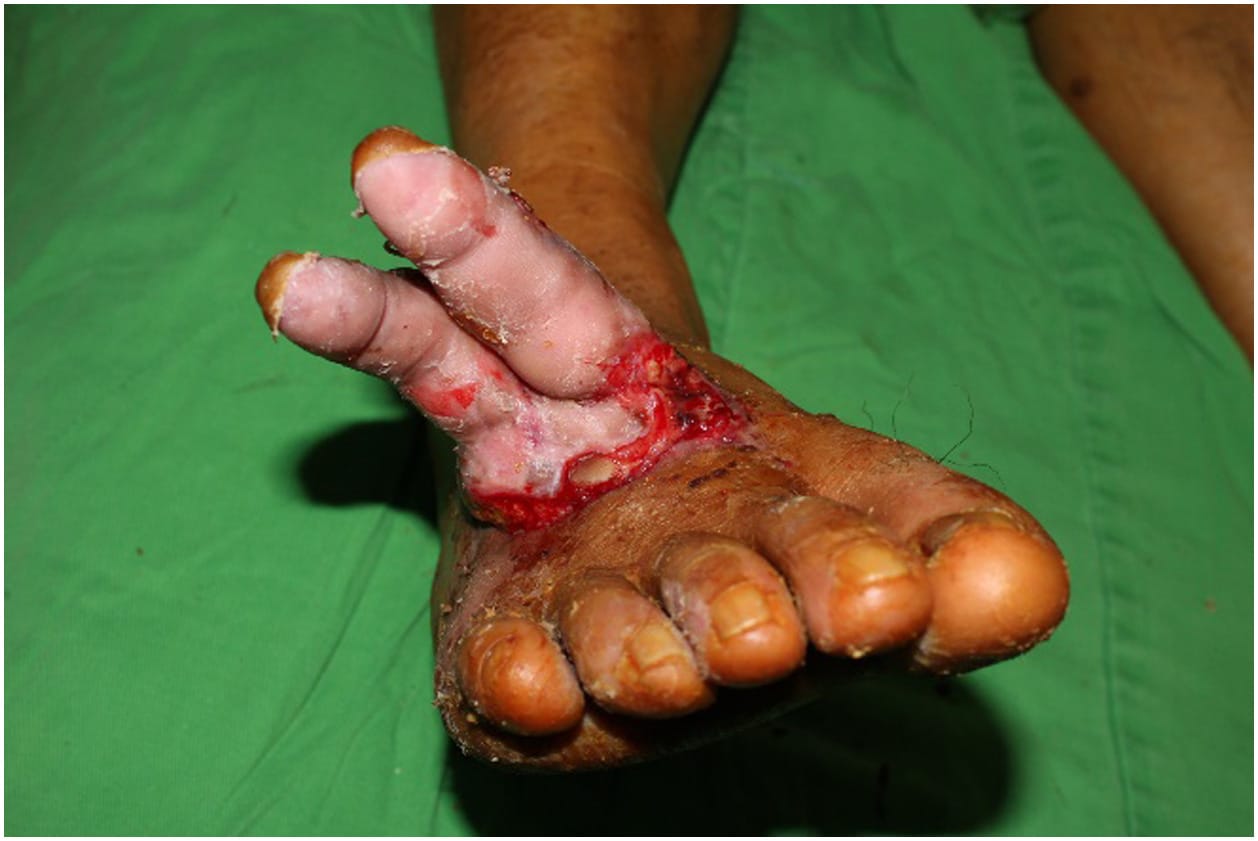
This week's image shows temporary ectopic replantation, where amputated digits are attached to a different part of the body to keep them viable until definitive reconstruction is possible. Here, the middle, ring, and little fingers were temporarily replanted onto the dorsum of the foot, using the dorsal foot vasculature to restore circulation.
Severe crush, avulsion, and soft-tissue injuries can leave the original recipient site unsuitable for immediate replantation. Ectopic replantation effectively “banks” living tissue, buying time to debride and reconstruct the injured hand while preserving potentially salvageable digits.
Technique Tip
Multiple Digit Replantation
This operative video demonstrates five-digit replantation, including bone fixation, tendon, nerve, and vessel repair, followed by postoperative recovery.
Replantation following amputation of multiple digits and the thumb requires systematic reconstruction of the key skeletal, tendinous, vascular, and neural structures, with microsurgical vessel repair critical to restoring perfusion to each replanted digit. The challenge extends beyond survival of the digits to achieving meaningful functional recovery.
How I Operate
Snippet From Ep 4: A Small Anatomical Detail With a Big Impact
Dr. Elizabeth Hall-Findlay breaks down the thinking behind the true superomedial pedicle in breast reduction.
She explains why preserving the second and third interspace vessels matters, why the blood supply is more superficial than many surgeons assume, and why the parenchyma itself is not what keeps the nipple alive.
What Does the Evidence Say?
Can Digital Replantation Wait Until Morning?
Pedro Cavadas and colleagues tested this directly in 597 digital replantations. Carefully selected injuries presenting in the evening were delayed until the following morning if they had less than 12 hours of preceding ischaemia and no major contamination. Survival was 93.4% after overnight-delayed replantation versus 91.2% after immediate replantation, with no significant difference between groups. Similar results have been reported with delayed or staged replantation, while newer pooled evidence suggests that cold preservation substantially extends the tolerated ischaemic window. Conversely, prolonged warm ischaemia remains important: survival is better within the first 6 hours than after 6-12 hours of warm ischaemia.
The practical lesson is therefore not that time no longer matters, but that it should not be considered in isolation. Injury mechanism, appropriate preservation, smoking, vessel quality, and the reconstructive requirements of the digit also influence survival. This evidence should not be extrapolated to proximal limb amputations containing substantial muscle, where prolonged ischaemia carries very different consequences.
(Cavadas, 2018); (Harbour, 2021); (Fijany, 2024); (Li, 2008); (Woo, 2015)
Articles of the Week
3 Interesting Articles with One-Sentence Summaries
When infection threatened an initially successful arm replantation, temporary transfer to the groin preserved the limb until the recipient site was suitable for definitive replantation.
Following traumatic testicular avulsion, temporary forearm replantation preserved the testis while enabling creation of a longer vascular pedicle for subsequent microsurgical transfer back to the perineum.
Among 261 replanted or revascularized hands and digits, survival reached 82%, yet intrinsic muscle recovery remained poor, highlighting the important distinction between successful tissue salvage and meaningful functional restoration.
