


In this week's edition
- ✍️ Letter from P'Fella
Before you read the answer, make the call - 🖼️ Image of the Week
Rebuilding the palatal sling - 🚑 Technique Tip
Furlow double-opposing Z-plasty - 🎧 How I Operate
Next season of How I Operate - Guest recommendations - 📖 What Does the Evidence Say?
Ideal timing for cleft palate repair - 🔥 Articles of the Week
Genetic link in cleft lip and palate, impacts on speech after palate repair, & 3 goals of cleft palate repair. - 💕 Feedback
Suggest ideas & give feedback!
A Letter from P'Fella
Before You Read the Answer, Make the Call
Once someone has laid out the reasoning, everything can seem fairly obvious, including the finding we might have overlooked on our own.
Being asked what you would do next is a different experience. You might be able to name several flaps that could cover a defect, but choosing between them means thinking about the patient, the available tissue, and what you’re trying to achieve. Sometimes you get halfway through explaining your choice and realise you need more information. That’s a useful moment in teaching. You’ve found the exact point where your understanding needs a little more work.
I’d like us to be more comfortable with those moments. It can feel awkward to put forward an answer when you’re unsure, especially in front of colleagues. But saying how you arrived at it gives someone a chance to help with the part you’re struggling with. They might agree with your choice but question the reasoning, or suggest an alternative you hadn’t considered. Even when experienced surgeons disagree, hearing what each person is giving more weight to can be more useful than simply being told the preferred operation.
There’s something practical to take from that when we’re reading, too. Before opening the explanation, spend a moment deciding what you would do and why. Be honest about what you’re uncertain about. Then compare the reasoning, rather than just checking whether you picked the right option. You might have reached the right answer for the wrong reason, or made a reasonable choice based on an assumption the case never addressed. Both are worth noticing.
We have been working on bringing the Sunday Quiz back to The Plastics Paper, which is what got me thinking about this in the first place. I’d like each question to give you a reason to pause, make a decision, and consider someone else’s approach. And when an explanation leaves you unconvinced, I hope you’ll reply and tell us why. There’s a good chance a discussion would help not only you, but many others to see perspectives they didn't consider before.
P’Fella ❤️
Image of the Week
Rebuilding the Palatal Sling
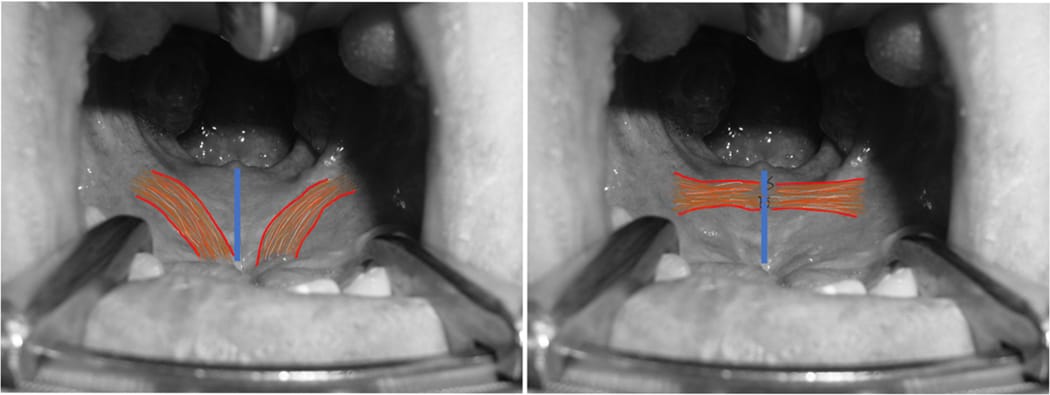
In a normal soft palate, the levator veli palatini muscles form a transverse sling, elevating the palate during speech and swallowing. In cleft palate, these fibres can instead run abnormally towards the posterior edge of the hard palate, compromising velopharyngeal function.
This image shows the principle behind revision intravelar veloplasty. Through a midline incision, the abnormal muscle attachments are released and the velar muscles are dissected before being re-repaired transversely across the midline, recreating a more functional muscular sling.
Technique Tip
Furlow Double-Opposing Z-Plasty
The Furlow palatoplasty uses opposing Z-plasties on the oral and nasal surfaces of the soft palate to lengthen the velum and reorient the levator musculature into a more transverse position. In secondary palatoplasty, these principles can be used to address persistent velopharyngeal insufficiency (VPI) following previous cleft palate repair.
In this operative video, a secondary Furlow palatoplasty is performed in a patient with VPI. The procedure demonstrates flap design and elevation through previously scarred tissue, transposition of the opposing Z-plasties, reconstruction of the velar musculature, and layered closure to restore palatal length and configuration.
How I Operate
Next Season of How I Operate - Guest Recommendations
 Dr Ryan Sugrue
We’re thinking through the topics we want to cover, the conversations we want to have, and the people we’d love to bring into the discussion.
So we’d love to hear from you. Who would you like to hear from next?
Leave your suggestions below 👇
What Does the Evidence Say?
Ideal Timing for Cleft Palate Repair
The best contemporary evidence comes from the international TOPS trial, which randomised 558 medically fit infants with nonsyndromic isolated cleft palate to primary repair at either 6 or 12 months. At 5 years, insufficient velopharyngeal function was significantly less common after 6-month repair (8.9%) than after 12-month repair (15.0%), with postoperative complication rates remaining low and similar between groups. Earlier PRS work also found better phonologic development after repair at 6 months, although velopharyngeal insufficiency rates were similar between groups.
The important caveat is growth. Systematic reviews examining hard-palate timing and maxillary development have not produced a consistent answer: most available studies are retrospective, heterogeneous, and at high risk of bias. So the evidence currently supports a real speech advantage to earlier repair in appropriately selected infants, without proving that one age is universally optimal for every cleft phenotype or surgical protocol. Timing should still be integrated with cleft type, technique, airway, anaesthetic considerations, and the experience of the multidisciplinary cleft team.
(Gamble, 2023); (Ysunza, 1998); (Liao, 2006); (Rodrigues Salgado, 2019); (Cornefjord, 2023)
Articles of the Week
3 Interesting Articles with One-Sentence Summaries
First-degree relatives of someone with cleft lip have an estimated 32-fold higher risk, while identical twins show 40-60% concordance, supporting a strong, but not exclusively genetic, basis for nonsyndromic clefting.
Despite similar final speech outcomes, 37% of children with isolated cleft palate required secondary pharyngoplasty compared with none of those with unilateral cleft lip and palate, suggesting isolated cleft palate may be more challenging to correct with primary surgery alone.
Successful cleft palate repair centres on three goals: separating the oral and nasal cavities without fistula, achieving sufficient velar length, and restoring the levator muscle sling to a functional transverse orientation.
