


In this week's edition
- ✍️ Letter from P'Fella
ST3 prep: What would help you the most? - 🖼️ Image of the Week
How an editor judges your paper - 🚑 Technique Tip
What makes a study methodologically strong? - 🎓 Building in Public
Did you like last week’s Aesthetic Decisions? - 🎧 How I Operate
That’s a wrap on this season! - 📖 What Does the Evidence Say?
Can AI be used safely in scientific writing? - 🔥 Articles of the Week
RCTs, struggles in publishing research, & AI in aesthetics. - 💕 Feedback
Suggest ideas & give feedback!
A Letter from P'Fella
ST3 Preparation: What Would Help You the Most?
Even deciding where to start can take time, particularly when the advice you’re getting comes from people who applied in different years.
We have an existing Plastic Surgery ST3 interview guide on the website, and we’re working on an updated version with a few supporting articles. We’re expanding the preparation material to cover more of the application process, including eligibility, portfolio evidence, the interview itself, and how to work out where you need to spend your time.
One thing we try to pay attention to is the gap between having done the work and being able to explain it.
Take an audit: you might know the project inside out, but could someone looking at your portfolio quickly establish what you contributed and what changed? Could you then discuss its limitations in an interview?
Those are useful things to prepare, and they’re much easier to work on when you have specific examples of what to check.
The same goes for clinical preparation. Reading an answer and explaining your own approach aloud are quite different experiences. Because of this, we would like to include tips like trying a timed mock early, so you can find out whether you need to work on your knowledge, prioritisation, or simply getting to the point.
“Revise burns” is a big task. “Practise giving a clear assessment and escalation plan for a burns referral” gives you something specific to do and get feedback on. That’s the level of practical detail we'd like to include in the updated guide.
We’re also being careful to distinguish published recruitment guidance from details that still need confirmation for the next application cycle.
Before we finalise the articles, though, what would help you most? You might need a clearer explanation of portfolio scoring, worked clinical scenarios, or a manageable revision plan. And those of you who have already been through ST3 selection may remember something you wish you’d understood earlier.
Let us know below 👇
P’Fella ❤️
Image of the Week
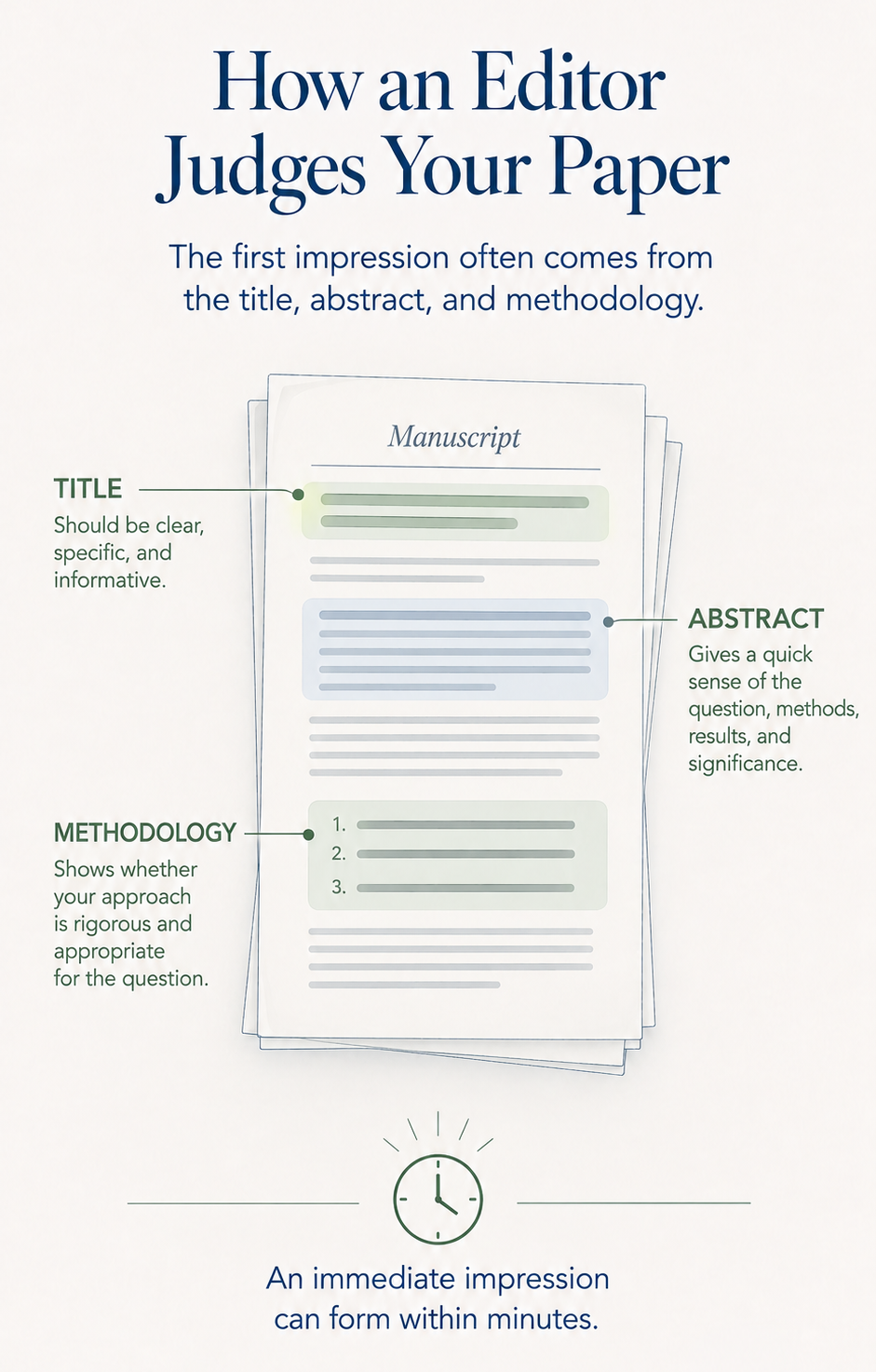
How an Editor Judges Your Paper
Before your paper reaches peer review, an editor has to decide whether it is worth sending any further.
That first impression starts with the title and abstract. Is the research question clear? Can the editor quickly understand what was done and why it matters? Then comes the methodology. A striking result will not rescue a study if the methods cannot properly answer the question.
In our latest How I Operate episode, JPRAS Editor-in-Chief Adam Reid walks through what actually happens after you hit submit, including how editors screen manuscripts, what they look for in the methodology, and why good research starts with a strong question and a study designed to answer it.
Technique Tip
What Makes a Study Methodologically Strong?
When a paper reaches a journal editor, impressive numbers alone aren't enough. Editors look at how the study was designed, how the data were collected and analysed, and whether the conclusions are actually supported by the methodology. A large dataset can still raise important questions about sample size, outcome events, patient selection, and study design.
In our latest episode of How I Operate, Adam Reid breaks down a study with 500 free flaps and nearly 30,000 images and explains the questions an editor would ask before being persuaded by those numbers. For anyone conducting research, this episode sheds light on what you should be thinking about before you submit yours.
Building in Public
Liked Last Week’s Aesthetic Decisions?
 PlasticsFella
Our goal: Each edition takes one area of aesthetic surgery and focuses on the decisions behind it, including how you assess the patient, what findings actually change your plan, and the evidence worth knowing.
Our first edition looked at the periorbital region, with the 60-second assessment, blepharoplasty vs brow lift, and how to think about the region as one connected aesthetic unit.
If you enjoyed the first edition, Aesthetic Decisions mailing list is open below.
How I Operate
That’s a Wrap on This Season!
Across the season, we’ve sat down with plastic surgeons who have helped shape techniques, classifications, and ideas that are now part of everyday practice to ask them how those ideas actually came about.
If you haven’t listened yet, you can find it here.
We'd love to know which conversations you enjoyed most, who you'd like us to sit down with next, and, most importantly, what we could do better next season.
What Does the Evidence Say?
Can AI Be Used Safely in Scientific Writing?
Current editorial guidance, therefore, draws a clear line between assistance and accountability. The ICMJE states that AI tools cannot qualify as authors, that their use should be disclosed, and that human authors remain responsible for the accuracy, originality, attribution, and integrity of everything submitted. It also warns reviewers and editors not to upload confidential manuscripts into AI systems where confidentiality cannot be assured. WAME and COPE take the same position: AI use should be transparent, but responsibility for the manuscript stays with the human authors.
The practical takeaway is not “don’t use AI.” It is to use it for tasks where the output can be checked: editing, organisation, brainstorming, or language support. Do not rely on an LLM to supply evidence, references, data, or scientific conclusions without independently verifying them against the original sources. AI can improve the workflow; it cannot take responsibility for the study.
(Bhattacharyya, 2023); (Walters, 2023); (Zielinski, 2023); (ICMJE); (COPE)
Articles of the Week
3 Interesting Articles with One-Sentence Summaries
Among 57 plastic surgery RCTs, methodological quality was low, with only 4% using intention-to-treat analysis, 23% reporting patient blinding, & 25% adequately handling and reporting withdrawals.
Among 188 respondents across 21 LMICs, the leading barriers to publishing were clinical workload (46%), lack of mentorship (38%), and publication charges (35%), while half also reported difficulty accessing plastic surgery journals.
Across 18 studies, AI and machine-learning models were used for applications including surgical planning, image-based assessment, & predicting postoperative complications, although the authors caution that AI-generated simulations may create unrealistic patient expectations.
