


In this week's edition
- ✍️ Letter from P'Fella
Why knowing something and teaching it are different skills - 🖼️ Image of the Week
Blood supply to the nipple (intra-op pic) - 🚑 Technique Tip
How Elizabeth Hall-Findlay does breast reduction - 🎓 Building in Public
Sneak peek: How I Operate - 📖 What Does the Evidence Say?
Superomedial vs inferior pedicle - 🔥 Articles of the Week
Wise pattern origin, vertical mammoplasty, & breast reduction by Elizabeth Hall-Findlay - 💕 Feedback
Suggest ideas & give feedback!
A Letter from P'Fella
Why Knowing Something and Teaching It Are Different Skills
That's not always the case. You can spend years doing something, understanding it deeply, and still struggle to explain it in a way that makes sense to someone earlier on. That doesn’t mean you don’t know enough, but the things that feel obvious to you now aren't always obvious to everyone, especially if they're just getting started. Once you’ve lived with a subject for long enough, it’s very easy to forget where people actually struggle.
That’s become much clearer while we’ve been working through articles and building our pilot Aesthetics Department. Quite a lot of good surgical knowledge starts off in a form that makes perfect sense to the person writing it, but not always to the person reading it. The steps are there, the facts are there, the logic is there somewhere too, but it still doesn’t quite teach. It doesn’t always show you where decisions have to be made in real life. It doesn’t always explain when and why something might be important. It also doesn’t help when you’re tired, or reading quickly, or trying to make sense of something you’ve only half understood before.
This is why we care so much about reviewing and editing the articles, not just approving and publishing them. A piece can have all the accurate facts and technique breakdowns, and still not be very helpful. It can be technically correct and still leave the reader doing too much of the work.
The difference usually comes down to a few things: Does the flow make sense? Is the explanation doing more than listing facts? Are the diagrams and images actually supporting the text? Is the key takeaway clear enough to stay with you after you close the page?
Over the years of creating educational content, our team has come to understand teaching as its own skill. It takes thought, patience, honesty, and usually a few rounds of editing and refining before something really starts to land. That’s what we’re trying to build towards. Not just articles that are right, but articles that genuinely help people learn in a way that stays with them.
P’Fella ❤️
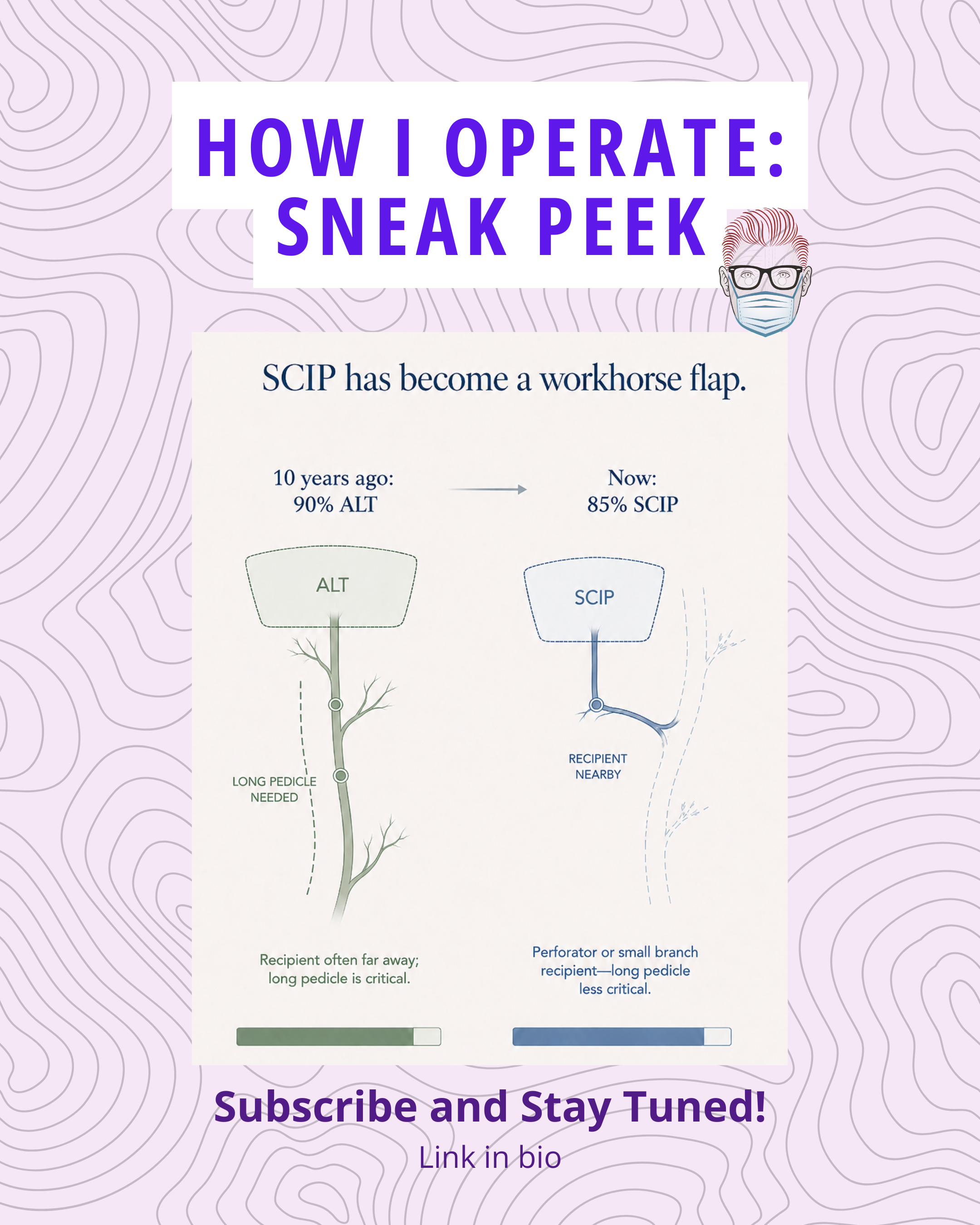
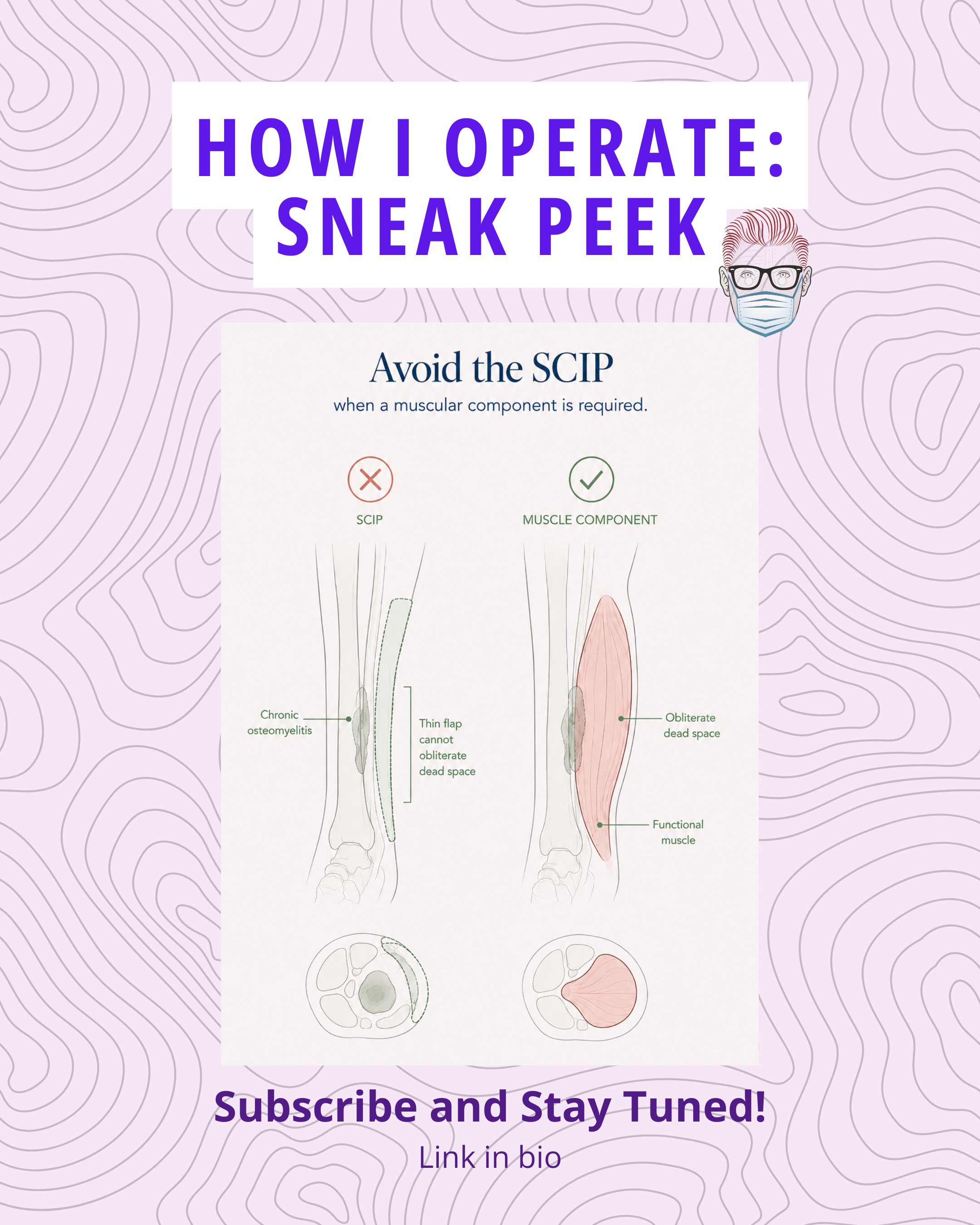
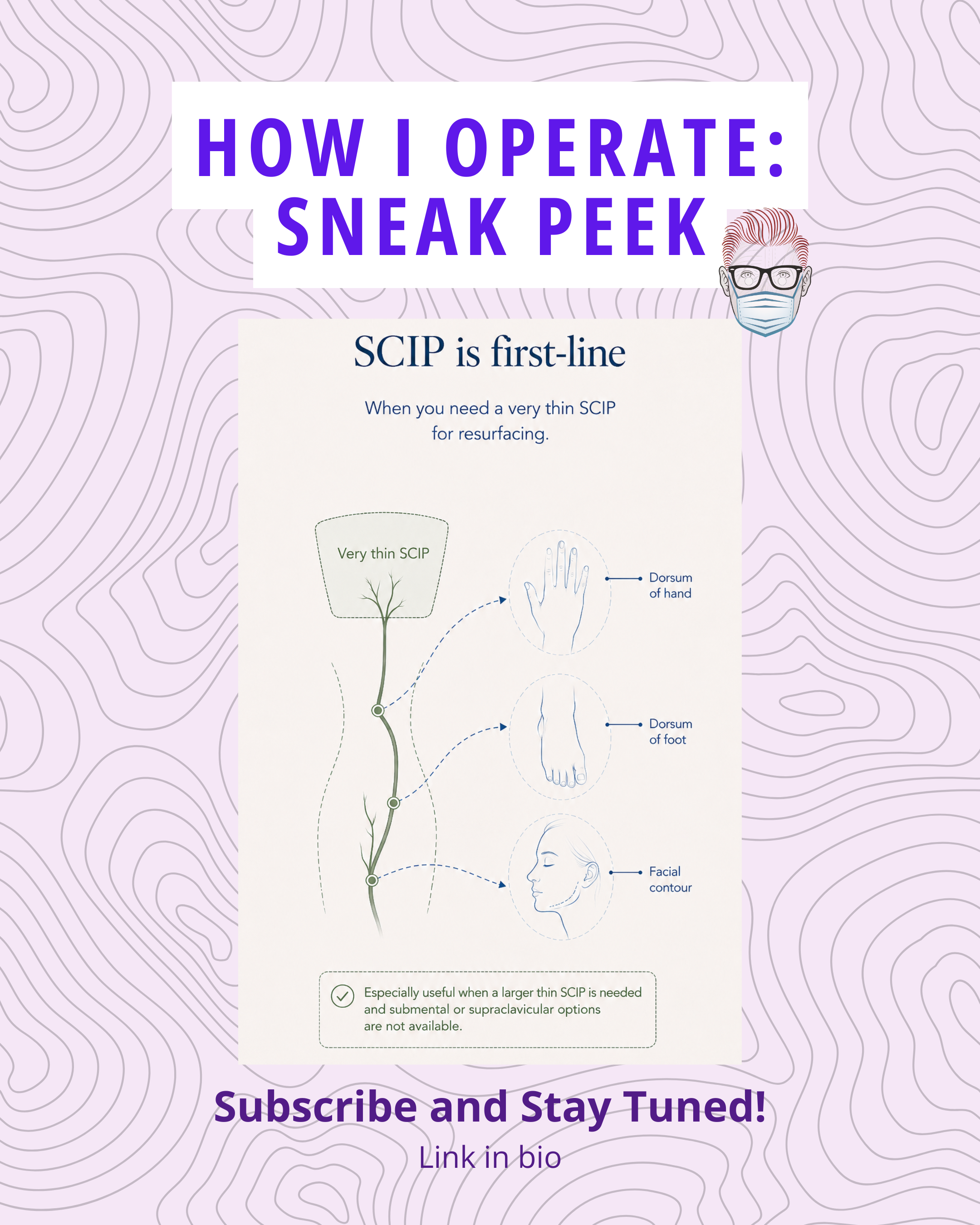
P.S. Two days ago, I had the privilege of speaking with one of the most influential plastic surgeons in breast surgery. We recorded the conversation and will be releasing it soon. In the meantime, here’s another technique-focused episode: SCIP Flaps.
Image of the Week
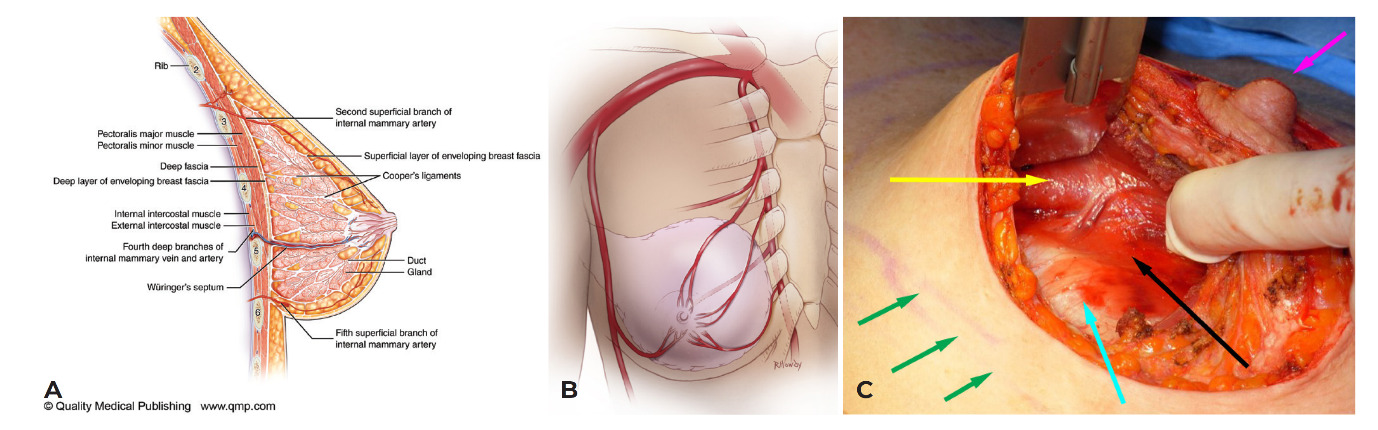
Blood Supply the Nipple (Intra-Op Pic)
The superomedial pedicle works because its key blood supply is superficial, not full thickness. A bulky dermoglandular pedicle may actually compress the vessels during inset. Thinning the pedicle allows safer positioning while preserving the dominant superficial vascular supply and improving breast shape.
Ian Taylor’s anatomical insight helped define the superficial vascular basis of the true superomedial pedicle, supporting safe thinning and reliable nipple-areola perfusion.
Technique Tip
How Elizabeth Hall-Findlay Does her Breast Reduction
Some techniques shape how an entire generation of surgeons operates. Dr Elizabeth Hall-Findlay walks through her superomedial pedicle vertical breast reduction technique, covering markings, pedicle design, breast shaping, and closure. Whether you're learning the operation for the first time or refining your current approach, there are practical pearls throughout.
Source AJOPS/Elizabeth Hall-Findlay
Building in Public
Sneak Peek: How I Operate
In the upcoming season, we’ll have discussions with experts in plastic surgery about decision-making on the spot, technical details that matter, and the practical lessons that come from using certain techniques in real cases.
Watch out on Spotify for more snippets dropping soon!
Sneak Peek from How I Operate - New Podcast Season
What Does the Evidence Say?
Superomedial vs Inferior Pedicle
Clinically, the current evidence does not show a universal winner. A recent meta-analysis found that superomedial pedicles were associated with shorter operative time, lower infection rates, and higher BREAST-Q satisfaction, but also with more seroma and more decreased NAC sensation, with no significant difference in NAC loss, fat necrosis, asymmetry, or hematoma compared with inferior pedicles. A matched cohort study similarly found no significant difference in overall complication rates between superomedial vertical-scar reduction and inferior-pedicle Wise-pattern reduction. In moderate-sized reductions, randomized evidence also suggests that vertical/medial-pedicle techniques may produce more acceptable scars, but at the cost of more revisions than Wise-pattern/inferior-pedicle reductions.
Sources: (Tanas, 2025); (Antony, 2013); (Cruz-Korchin, 2003); (Seitz, 2015); (Zheng, 2017)
Articles of the Week
3 Interesting Articles with One-Sentence Summaries
Wise’s technique shows that using brassiere measurements to guide markings improves symmetry, nipple positioning, and safe resection limits, while reducing flap necrosis and aesthetic unpredictability compared to freehand planning.
Vertical mammoplasty with liposuction reshapes the breast through glandular suturing rather than skin, reducing scars, preserving vascularity and sensation, and improving long term shape stability.
Elizabeth Hall-Findlay refines vertical reduction by prioritising a superomedial pedicle, parenchymal reshaping over skin tension, and removing inferior lateral excess to improve shape, safety, and long-term outcomes.
