


In this week's edition
- ✍️ Letter from P'Fella
The basics are still the job - 🖼️ Image of the Week
Donati vs Allgöwer-Donati sutures - 🚑 Technique Tip
Simple interrupted suturing - 🎓 Building in Public
What should a great thumbnail look like? - 📖 What Does the Evidence Say?
Square knot vs Granny knot - 🔥 Articles of the Week
Suture choices, tectonic “sutures”, & staples vs sutures. - 💕 Feedback
Suggest ideas & give feedback!
A Letter from P'Fella
The Basics Are Still The Job
It’s tension, tissue handling, blood supply, knowing when to take a smaller bite, when to leave well alone, when a closure is helping, and when it’s making things worse. Those are the bits people like to file under “early training,” but they don’t stay there. They follow you into every bigger case you ever do.
That’s also why we care about the basics so much at P’Fella. The basics are where people build their instincts. If someone really understands the principle, they can adapt when the tissue is friable, swollen, under tension, or just not behaving the way the textbook said it would. If they only know the rule, they’re in trouble the second the case stops looking tidy. Good teaching should help people understand what their hands are actually doing and why it matters.
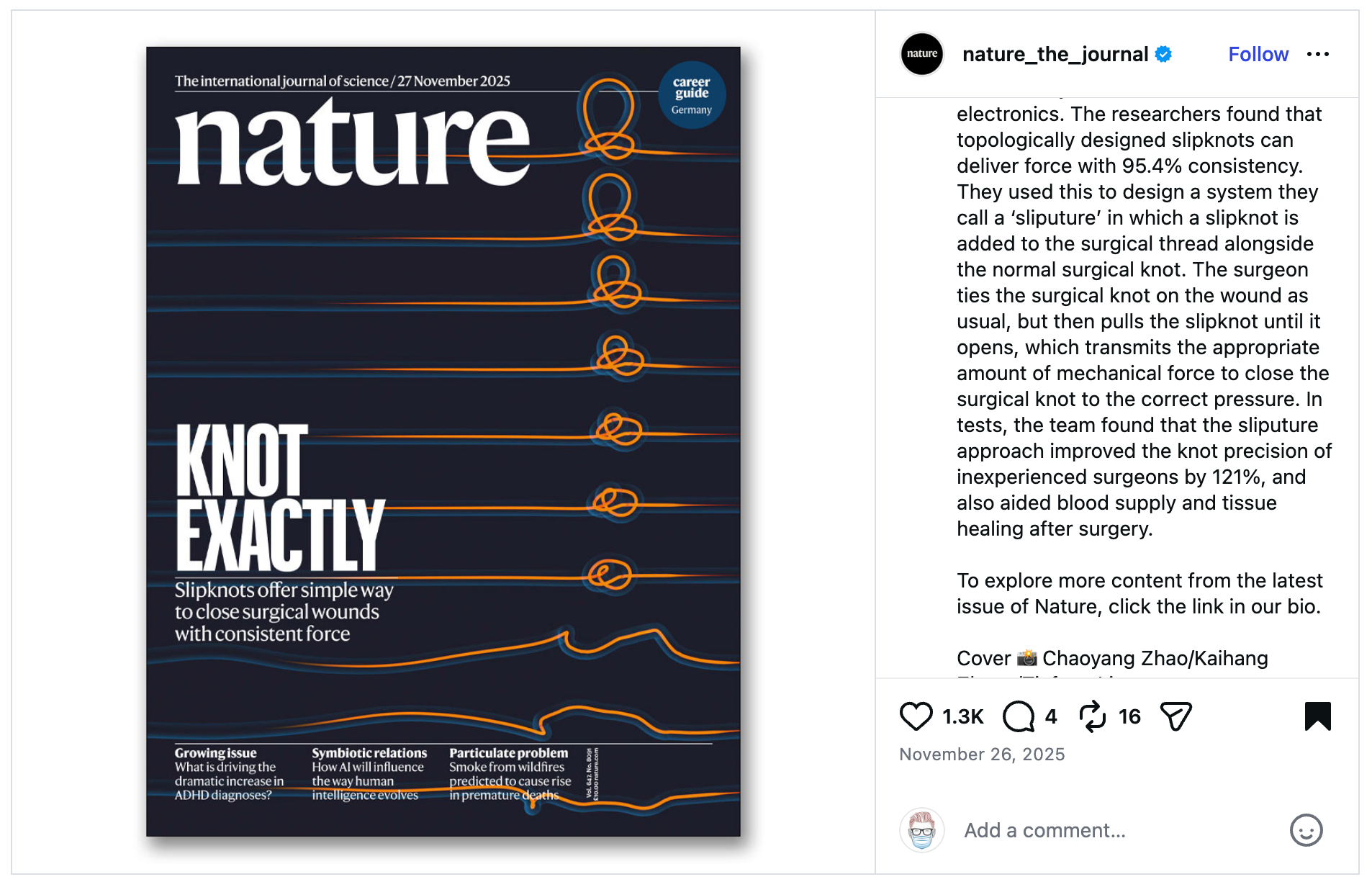
I recently came across this journal on knot tying on a slipknot-based “sliputure” that helped standardise closing force and improved knot-force precision in less experienced surgeons. Interesting in itself, but the reason it stood out is because it points back to the same thing: even something as ordinary as knot tension can change perfusion and healing.
So, the takeaway this week is a straightforward one. You do not outgrow the basics. You either keep sharpening them, or they become the weak point in everything else you do. Suturing and knot-tying are a good example of that. People talk about them as if they’re just the final step, the tidy-up at the end. But that's a critical point where judgment shows up, and they matter a lot more than most of us care to admit.
P’Fella ❤️
Image of the Week
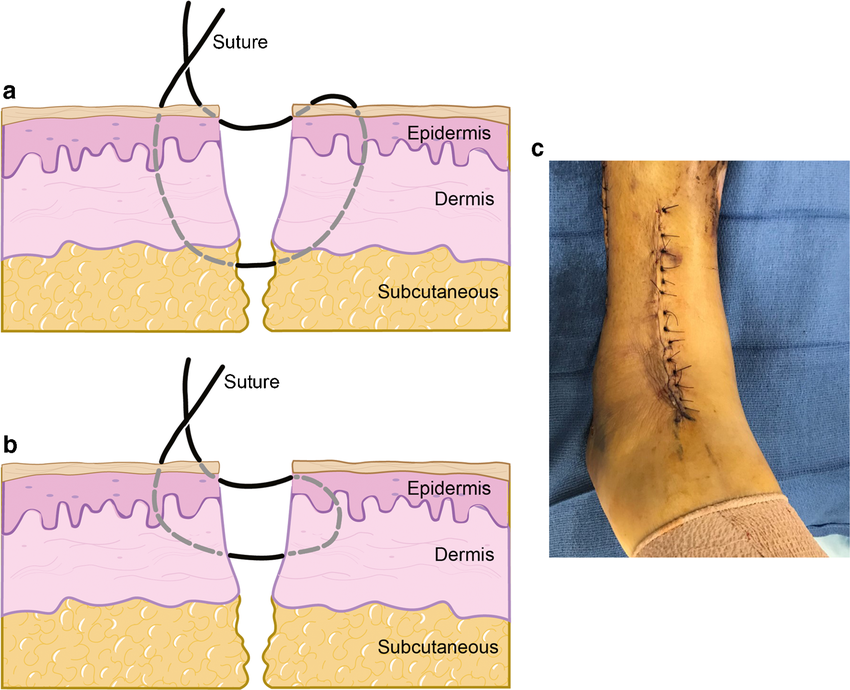
Donati vs Allgöwer-Donati Sutures
This schematic compares the classic Donati (vertical mattress) with the Allgöwer-Donati modification. The Donati vertical mattress provides excellent wound edge eversion and tension distribution, making it useful in high-tension closures. However, the superficial return bite passes through the epidermis, which can lead to skin edge strangulation and track marks if tied tightly.
The Allgöwer-Donati modification addresses this by placing the superficial component intradermally rather than transcutaneously, preserving dermal perfusion while maintaining eversion. The result is reduced risk of skin necrosis and improved cosmetic outcomes, particularly in areas where soft tissue is already compromised.
In trauma, subtle changes in suture technique can significantly influence healing and complication rates.
Technique Tip
Simple Interrupted Suturing
Good suturing is built on fundamentals. This week's video demonstrates the principles of instrument handling, needle control, and consistent tissue approximation that underpin every surgical closure.
A practical tip is to let the needle do the work. Follow the curve of the needle through the tissue rather than forcing it in a straight line, minimising tissue trauma and producing more accurate wound edge approximation.
Building in Public
What Should a Great Thumbnail Look Like?
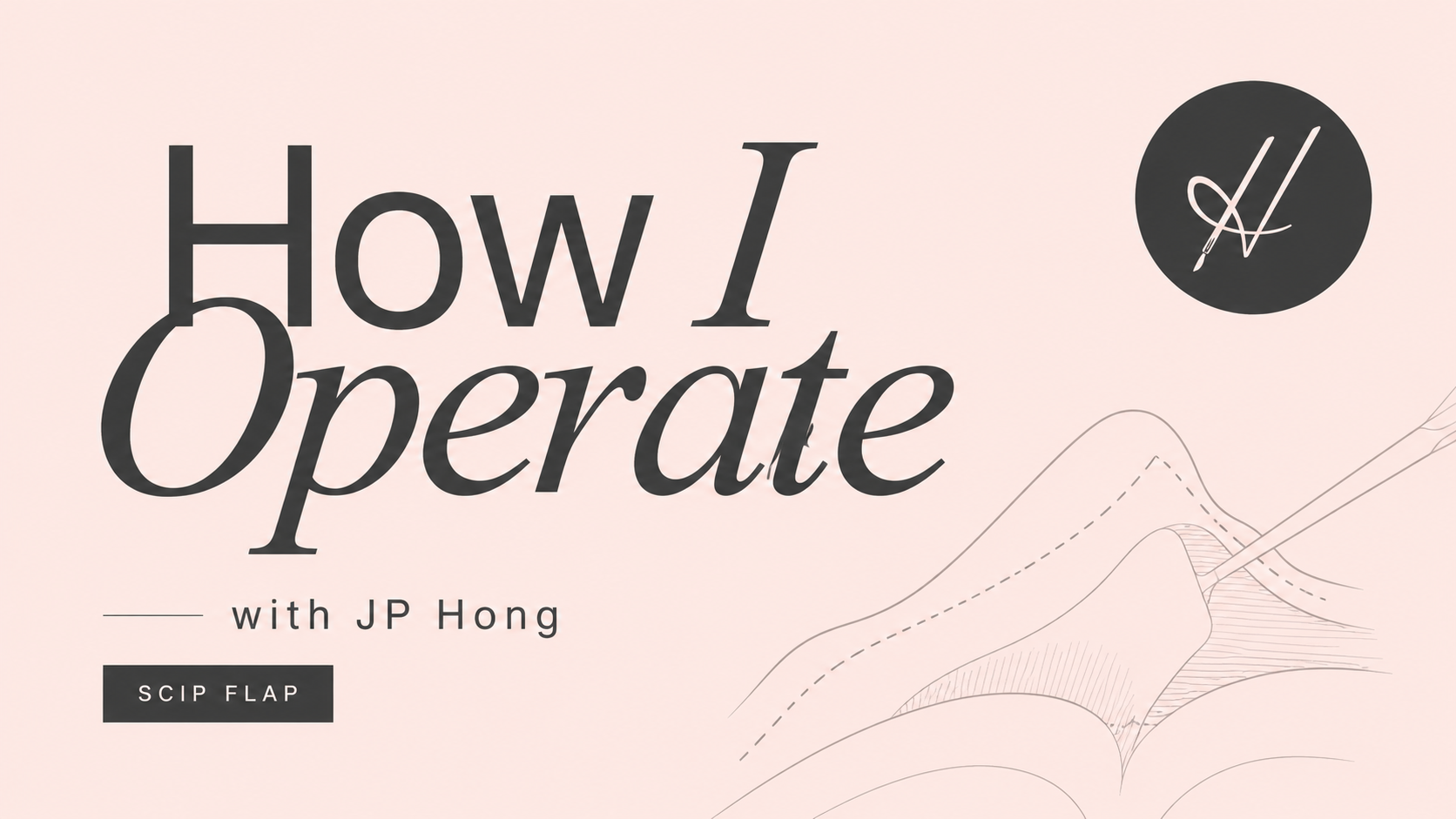
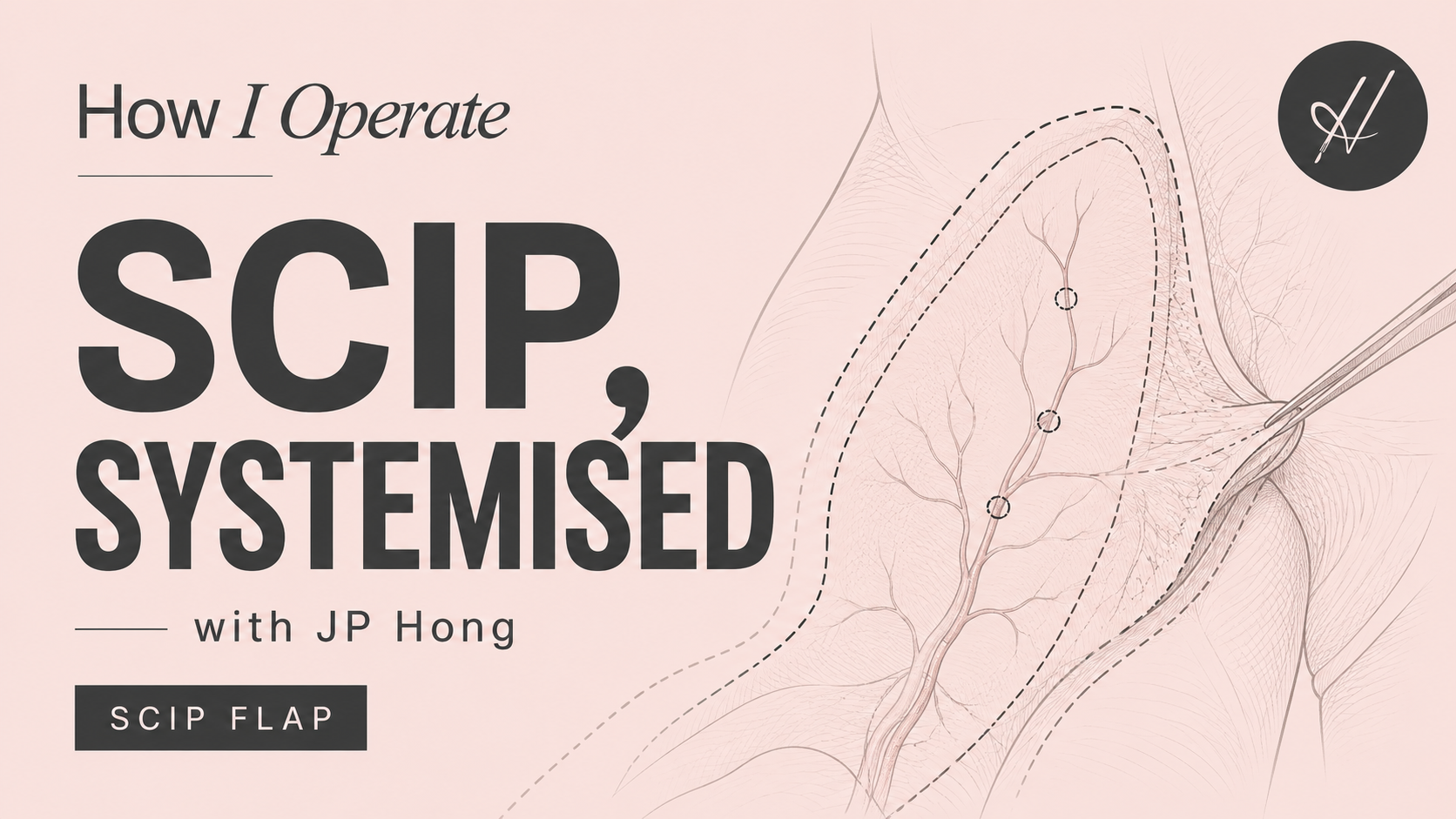

As we’re getting ready to release our upcoming podcast season, we want to hear your opinion on something super important: the thumbnail.
A thumbnail is the first thing people see before they ever hear the episode. It has to do a lot of work in a very small space. It should feel intriguing, easy to read, and true to the tone of the show.
We’ve been testing a few visual directions for our upcoming release and we’d love your take 👇
What Does the Evidence Say?
Square Knot vs Granny Knot
Additionally, knot security is not just about the knot type. It also depends on suture material and throw count. Studies in commonly used surgical sutures show that knot security varies with technique, material, and number of throws, and is not simply fixed by suture size. In practical terms, monofilaments are less forgiving and usually need more throws than braided sutures. Older comparative work also supports why the square knot remains the core teaching knot: it remains the benchmark against which modified knots are judged, even when a surgeon’s knot is chosen to improve initial friction in higher-tension situations.
Sources: (Lim, 2024); (Silver, 2016); (Muffly, 2014); (Avoine, 2016)
Articles of the Week
3 Interesting Articles with One-Sentence Summaries
The appropriate suture (monofilament vs braided, absorbable vs non-absorbable, barbed vs smooth) directly impacts tensile strength, infection risk, tissue reactivity, and scar quality, making it a key determinant of both healing and long-term aesthetic outcome.
Rather than a single plate boundary, Tectonic “Sutures” are often a complex, multi-layered zone of deformation with multiple “mini-sutures,” reactivated crust, and distributed strain, making reconstruction of past continental positions far less straightforward than textbook descriptions.
This meta-analysis suggests staple closure in orthopaedic surgery may carry a 3-4× higher risk of superficial wound infection compared to sutures (particularly in hip procedures), challenging the assumption that faster closure equals equivalent outcomes.
